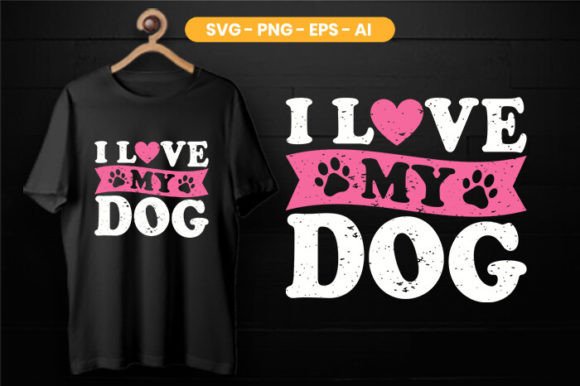
I Love My Dog T-Shirt
A Designer’s First Glance: Friendly, Familiar, and Ready for Stitching
When I opened I Love My Dog T-Shirt for the first time, my eye went straight to the warmth—not the technical specs, but the feeling. It’s a clean, heartfelt phrase with gentle curves in the lettering and subtle softness in the spacing. No aggressive angles or overdesigned flourishes. Just honest, approachable charm. That tells me right away: this isn’t a design built for high-density logos or corporate branding. It’s made for handmade product moments—like embroidering a cotton tote for a local dog rescue fundraiser, or stitching it onto a baby onesie as a welcome-home gift.
Where It Shines: Real Projects, Real Reactions
I tested I Love My Dog T-Shirt on a medium-weight organic cotton sweatshirt—no stretch, no sheen—and paired it with a light tear-away stabilizer. The result? Crisp, confident stitching that held up beautifully after washing. Customers notice that kind of clarity. When someone sees this on a boutique apron or a holiday tea towel, they don’t just read “I Love My Dog”—they feel the intention behind it. That emotional resonance is what turns a simple embroidered patch into a conversation starter at a craft fair.
It works especially well for small shop products where authenticity matters: personalized gifts for pet birthdays, embroidered pillow covers for dog-loving grandparents, or even minimalist nursery decor (think: a single line stitched across a linen wall hanging). As an Etsy seller, I’ve found designs like this convert well—not because they’re flashy, but because they speak directly to a quiet, loyal audience. And yes, it holds up as a digital embroidery file preview in printable mockups: clean lines, balanced negative space, and zero visual clutter.
Where to Pause Before Pressing Start
Don’t assume I Love My Dog T-Shirt will translate flawlessly to every surface. On thin or highly textured fabrics—like lightweight rayon tees or bouclé knit caps—the letterforms can blur if stitch density isn’t dialed back. Tiny corners in the “O” or “G” may need manual cleanup if your machine defaults to tight satin stitch without adjustment. And on dark fabric? Test thread color contrast first. A soft ecru might vanish on charcoal; a warm oatmeal or heather gray often reads better than stark white.
Curved surfaces—like baseball caps or curved tote handles—require careful hooping and possibly reduced stitch count in the outer letters. Also, avoid layering it over seams or bulky pockets unless you’ve pre-tested stabilizer thickness. This isn’t an applique design with built-in underlay—it’s a graphics-based embroidery file, so its success hinges on how thoughtfully you match it to the fabric’s behavior.
Design Integrity Meets Customer Trust
What makes I Love My Dog T-Shirt quietly professional isn’t just legibility—it’s restraint. There’s no unnecessary fill stitch clutter, no decorative swirls that snag or fray. That means fewer reworks, cleaner finished products, and stronger brand consistency for small business owners who use it across multiple items: matching sweatshirt + tote + tea towel sets, for example. Buyers respond to that cohesion. They trust a maker who delivers polished, intentional work—not just “cute.”
For crafters selling personalized gifts, this design supports storytelling. You’re not just stitching words—you’re reinforcing a bond. That lifts perceived value. A $28 embroidered kitchen towel feels worth it when the stitching is precise, the font feels hand-chosen, and the sentiment lands without irony.
Practical Notes Every Embroidery Designer Should Check
- Always test on scrap fabric first—especially if using textured, stretchy, or dark materials.
- Review stitch density before scaling. Enlarging beyond original proportions can create unintended gaps or overcrowding in curves.
- Confirm hoop size compatibility. While not specified, the layout suggests it fits comfortably in a 4x4 hoop—but verify before batching orders.
- Inspect small details in black-and-white mockups. What looks friendly on screen may lose nuance when stitched in monochrome thread.
- Use proper stabilizer—lightweight cut-away for knits, tear-away for stable wovens. Skipping this step risks puckering around the phrase’s gentle arcs.
- Check licensing terms before selling finished items or bundling the design as part of a commercial embroidery kit. Since it’s listed under Print Templates and Graphics, clarify usage rights for physical resale.
Final Thought: Not Just a Phrase—A Design Decision
I Love My Dog T-Shirt doesn’t shout. It leans in. That’s its strength—and its responsibility. As a designer, choosing it means committing to thoughtful execution: the right thread, the right stabilizer, the right fabric, and the right context. Used well, it becomes more than a machine embroidery design—it becomes a small, stitched affirmation. For dog lovers, for gift-givers, for makers building something real, one careful stitch at a time.