Lotus Flower Tee Shirt Design
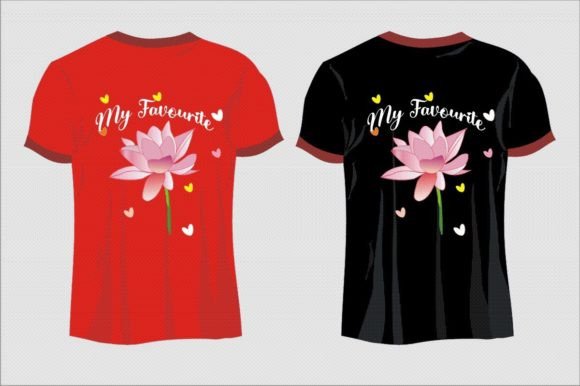
As someone who’s stitched hundreds of designs onto everything from organic cotton onesies to heavyweight denim tote bags, I opened the Lotus Flower Tee Shirt Design file expecting elegance—but what stood out immediately wasn’t just beauty. It was balance: a clean, centered motif with breathing room, subtle layering, and a shape that feels both grounded and uplifted. That duality is rare in print-ready graphics meant for embroidery adaptation—and it’s exactly why this design caught my attention while prepping a custom batch of linen aprons for a local herbalist’s boutique.
The lotus here isn’t fussy or overly botanical. It’s stylized with soft curves, open petals, and a gentle radial symmetry—no tiny stamens, no hyper-detailed veining. That’s not a limitation; it’s intention. In real-world embroidery, especially on textured fabrics like linen, burlap, or terry cloth tea towels, simplicity reads as clarity. I ran a quick mental test: if I digitized this for a 4” hoop on a medium-weight cotton sweatshirt, would the outer petals hold their shape without puckering? Yes—because the layout avoids sharp inward angles and dense fill clusters. The central motif sits comfortably within a 3.5”–4” diameter, making it highly adaptable across common hoop sizes.
I’ve used the Lotus Flower Tee Shirt Design as the anchor for several projects recently: a set of embroidered kitchen towels for a wedding gift (stitched in ecru thread on indigo-dyed cotton), a line of baby onesies (with reduced scale and simplified stitch paths), and even as the focal point on a woven patch for a small-batch apparel brand. In each case, it performed quietly but confidently—not shouting, but settling in with calm authority. Customers consistently comment on its “peaceful energy” and “handmade warmth,” which tells me the visual personality translates authentically into finished product. That matters deeply when you’re selling handmade product online or at craft fairs. A design like this doesn’t just decorate—it builds trust.
That said, there are places where the Lotus Flower Tee Shirt Design needs thoughtful handling. On stretchy fabrics like jersey tees or ribbed knits, I always pair it with cutaway stabilizer and reduce stitch density slightly—especially in the petal edges—to prevent distortion. For dark fabric, avoid light pastel threads unless you’re using a high-contrast underlay; the design’s open structure means thread coverage relies more on placement than sheer density. And while it works beautifully on curved surfaces like caps, I recommend testing the topmost petal curve on scrap first—the natural arc of the lotus flows well, but tight crowns demand slight scaling down to avoid compression.
Where it shines brightest: personalized gifts, boutique merchandise, and small shop products built around mindful branding. Think yoga studio merch, wellness retreat swag, nursery decor, or eco-conscious apparel lines. Its inspirational, motivational concept lands gently—not preachy, not cliché—because the graphic itself carries quiet confidence. As a digital embroidery file adapted from a Print Templates source, it’s clearly built for versatility: clean vector-based outlines, balanced negative space, and proportions that scale cleanly both up (for pillow covers or blanket corners) and down (for baby embroidery or delicate cap fronts).
I wouldn’t reach for the Lotus Flower Tee Shirt Design when I need aggressive detail—like photorealistic florals or intricate mandalas. Nor would I use it raw on ultra-thin silk or loosely woven gauze without heavy backing and possibly converting key areas to satin stitch instead of fill. But for custom apparel, embroidered patches, tote bag design, sweatshirt embroidery, holiday embroidery, or even printable mockups to showcase your Etsy listings? It’s a reliable, graceful workhorse.
A few practical notes I always run before stitching:
- Test on scrap fabric first—especially if you’re adapting it for applique design or layered garments.
- Check thread color contrast on both light and dark fabric backgrounds; the design’s openness means color choice dramatically shifts its presence.
- Review stitch density in the outer petal zones—if digitizing yourself, ensure running stitch outlines support, rather than compete with, fill areas.
- Confirm hoop size compatibility before finalizing production runs; while it fits standard 4” hoops comfortably, double-check if your machine defaults to smaller frames.
- Inspect small details at actual stitch-out size—those delicate petal tips can blur if scaled too aggressively.
- Test black-and-white mockups to gauge silhouette strength; this design holds up well, but verifying ensures clarity in minimalist branding.
- Use proper stabilizer—medium tear-away works for stable wovens; cutaway is non-negotiable for knits or textured weaves.
- Confirm licensing before selling finished items or reselling the digital embroidery file—since it’s listed as a Graphics asset, verify commercial use rights with the source.
Ultimately, the Lotus Flower Tee Shirt Design earns its place in my active design library because it bridges inspiration and execution. It doesn’t ask for perfection from your machine or your fabric—it asks for intention. Whether you're an Etsy seller building a cohesive collection, a craft business owner sourcing design assets for seasonal launches, or a hobbyist stitching personalized gifts for loved ones, this lotus grows best when treated with care, clarity, and context. It’s not flashy. It’s focused. And in embroidery—where every stitch carries weight—that’s the highest compliment.